National Fish and Wildlife Foundation awards $13.3 million for big game migration corridors in 11 Western states
The 14 grants, announced Sept. 24, restore winter range and bring fences to wildlife-friendly standards for elk, mule deer, pronghorn and moose. Most of the money goes to state wildlife agencies and Tribes; three nonprofits are among the grantees.
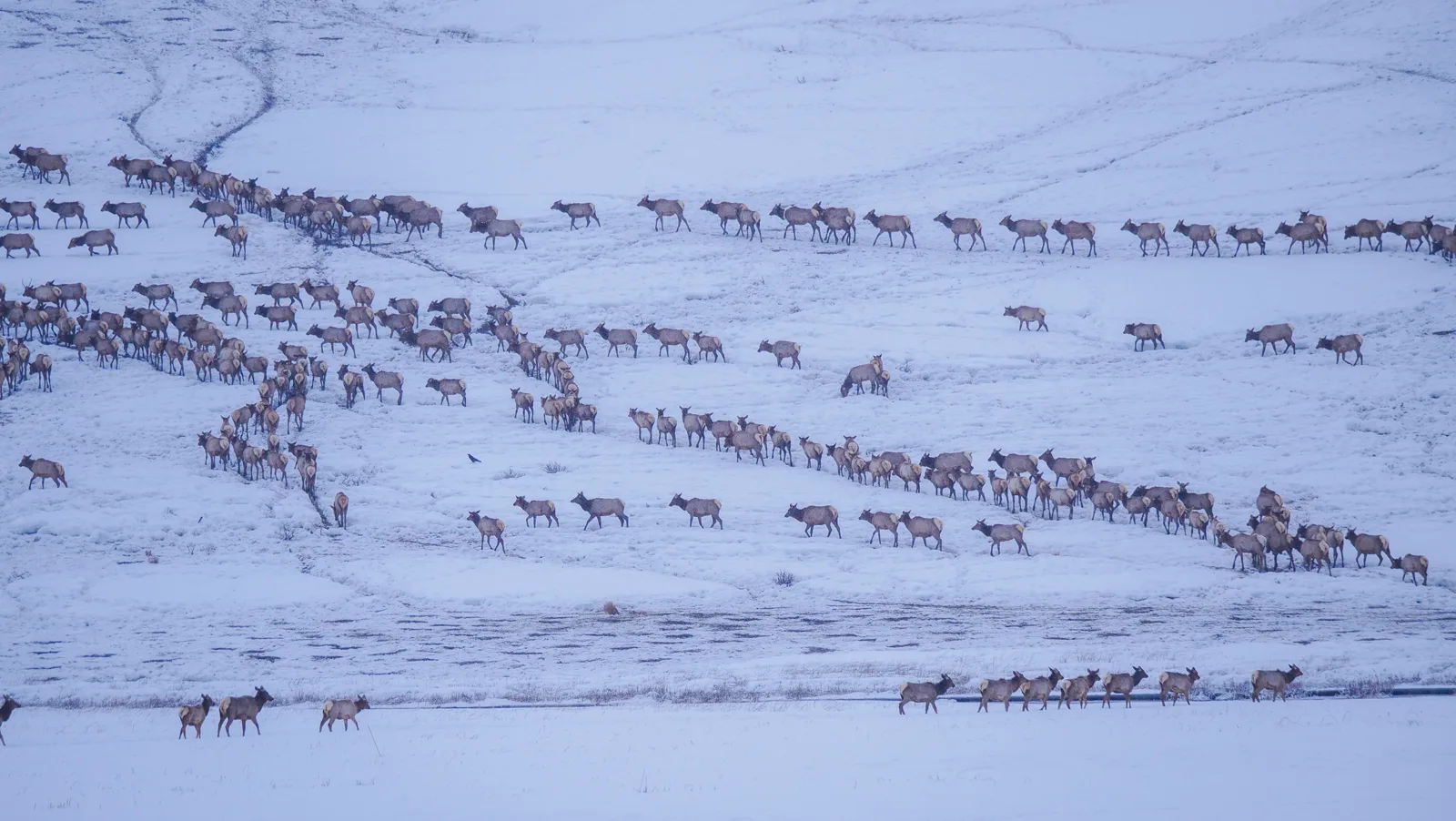
Washington. The National Fish and Wildlife Foundation said on Sept. 24 that it has awarded $13.3 million in 14 grants to conserve winter range and migration corridors for mule deer, elk, pronghorn, moose and other wildlife in Arizona, California, Colorado, Idaho, Montana, Nevada, New Mexico, North Dakota, Oregon, Utah and Wyoming. The grantees add $3.8 million in matching contributions, for $17.1 million in all.
The grants come from the Western Big Game Seasonal Habitat and Migration Corridors Fund, which the foundation runs with the U.S. Fish and Wildlife Service, the Bureau of Land Management, the U.S. Forest Service, ConocoPhillips, Cargill, Taco Bell and Native Americans in Philanthropy. The projects are expected to restore more than 40,000 acres and bring 225 miles of fencing to wildlife-friendly standards, the foundation said.
Most of the money goes to states and Tribes
By the Herald's count of the foundation's grant list, about $11.2 million went to four state wildlife agencies and four Tribes. The largest awards, close to $2 million each, went to the Three Affiliated Tribes of Fort Berthold in North Dakota, the Utah Division of Wildlife Resources, Montana Fish, Wildlife and Parks and the Wyoming Game and Fish Department.
Montana's grant pays for work on 16 sites in western Montana, on Wildlife Management Areas and nearby land: removing encroaching conifers, treating invasive plants, prescribed burning and modifying fences, on nearly 9,000 acres.
Three nonprofits are among the grantees. The Mule Deer Foundation received $589,100 to treat invasive annual grasses from the air on 6,700 acres and modify 5 miles of fence in south-central Idaho. The Nature Conservancy received $405,000 for invasive grass treatments and wildlife-friendly fencing on migration routes in Wyoming, including along Interstate 80. Sustainable Northwest received $114,500 to expand virtual fencing and adaptive grazing on eight ranches in Gilliam County, Ore.
Who could apply
This year's request for proposals, due April 21, had two options. Nonprofit 501(c) organizations could apply only under the first, alongside government agencies, Tribes and educational institutions, with at least a one-to-one non-federal match; the most competitive requests were at least $100,000. The second, paid for by the Interior Department, was open only to states and federally recognized Tribes, with grants typically from $100,000 to $2 million and a smaller match.
Projects had to address priorities in state wildlife agencies' plans or Tribes' own priorities, and every application needed a letter of support from the director's office of the state or Tribal wildlife agency.
Since 2019 the fund has awarded $34.9 million for 100 projects, the foundation said. Its page lists this year's request for proposals as closed and none yet for next year.
About this story
501c3.help wrote this story from the sources listed with it, not from material an organization sent. Our editors approved it on Sept. 29, 2026. Stories in The Nonprofit Herald are free, and nothing is asked in return. Editorial rules.
Found an error? Write to [email protected] and we will correct it.
For the organizations in this story: put the badge on your website

Put it on your About page or wherever you list press mentions, rather than in a footer that repeats on every page. It links to this story.
Linking is welcome and never required. Nothing about the story changes either way.