South Carolina budget writers agree that nonprofit earmarks must go through a city or county from next year
The informal deal is in no law or chamber rule. The Senate already sent its projects through local governments in the spending law Gov. Henry McMaster signed Sept. 1, while the House still named nonprofits on their own lines.
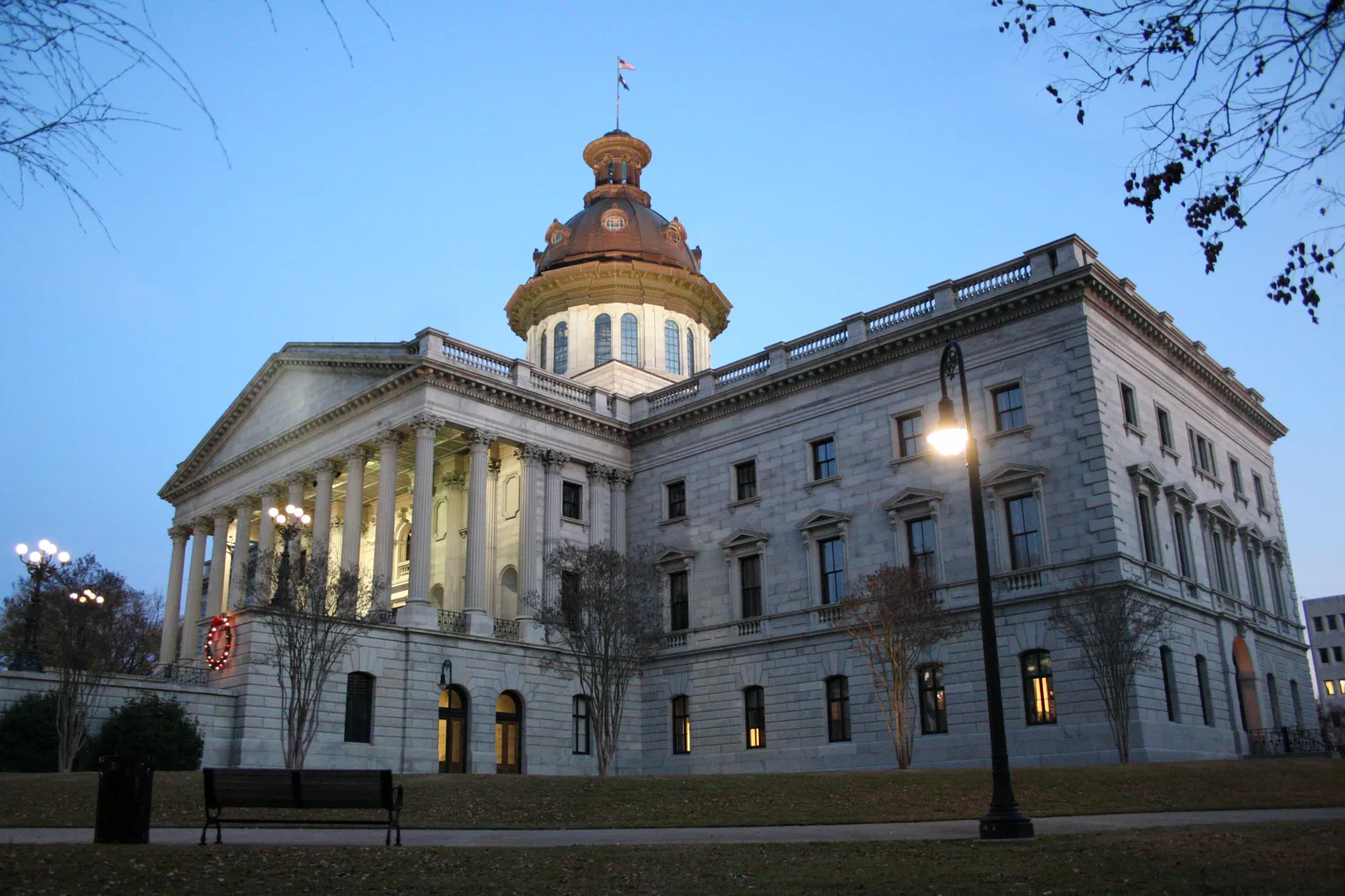
Columbia. Starting with next year's budget, South Carolina nonprofits that seek state money through legislators' local project requests, known as earmarks, will need a city or county to sponsor them, under an agreement between the Legislature's two chief budget writers, the SC Daily Gazette reported.
The agreement between Senate Finance Chairman Harvey Peeler, a Gaffney Republican, and House Ways and Means Chairman Bruce Bannister, a Greenville Republican, is in no law or chamber rule. Mr. Bannister called it a "gentlemen's agreement," and the leaders said it is not a ban. They announced it in August, along with a deal on this year's projects.
How this year's money moves
Those projects are in Act 261, about $351 million for the 2026-27 fiscal year, which Gov. Henry McMaster signed on Sept. 1. It tells the State Treasurer to pay out the money by Sept. 30, once any recipient that is not a government is verified as registered with the South Carolina Secretary of State as a business, nonprofit or charitable organization.
The Senate's $131 million share already works the new way. Each request names a local government as the "receiving entity," which can use the money or pass it to a nonprofit, and more than $5 million will reach nonprofits that way, the Gazette found. Mr. Peeler's $2 million to the city of York, for example, goes on to the Yorkville Agricultural and Education Society to preserve about 120 acres at the site of an abandoned orphanage.
The House's $220 million share still names nonprofits on their own lines, such as $355,000 for a United Way of the Midlands youth program and $300,000 for Special Olympics South Carolina. House members said the chamber would follow the Senate next year, the Gazette reported.
Oversight, and what comes next
Legislators said local governments face audits and open records laws that nonprofits do not.
“My hope from that would be that local governments are going to try to monitor those nonprofits. That's been one of my frustrations with nonprofits, is that you can't monitor it.”
Sen. Deon Tedder, a North Charleston Democrat, said shelters for domestic violence survivors, rehabilitation services and food banks are often run by nonprofits and might cease to exist in parts of the state without the money.
Nonprofit earmarks drew criticism after the 2024-25 budget set aside about $90 million for nonprofits, by the Gazette's count. Rep. Jordan Pace, a Goose Creek Republican who chairs the House Freedom Caucus, filed House Bill 5813 on Aug. 25 to replace earmarks with a fund open only to local governments and school districts, not nonprofits. It would have to be filed again next year; legislators said talks on choosing projects will continue.
About this story
501c3.help wrote this story from the sources listed with it, not from material an organization sent. Our editors approved it on Sept. 29, 2026. Stories in The Nonprofit Herald are free, and nothing is asked in return. Editorial rules.
Found an error? Write to [email protected] and we will correct it.
For the organizations in this story: put the badge on your website

Put it on your About page or wherever you list press mentions, rather than in a footer that repeats on every page. It links to this story.
Linking is welcome and never required. Nothing about the story changes either way.