National Fish and Wildlife Foundation and NOAA award $8.4 million to help ships avoid striking whales
Sixteen grants from the Vessel Strike Avoidance Fund, announced Nov. 18, go to nonprofits, universities and companies developing satellite, acoustic, thermal camera and AI tools to protect North Atlantic right whales and other species.
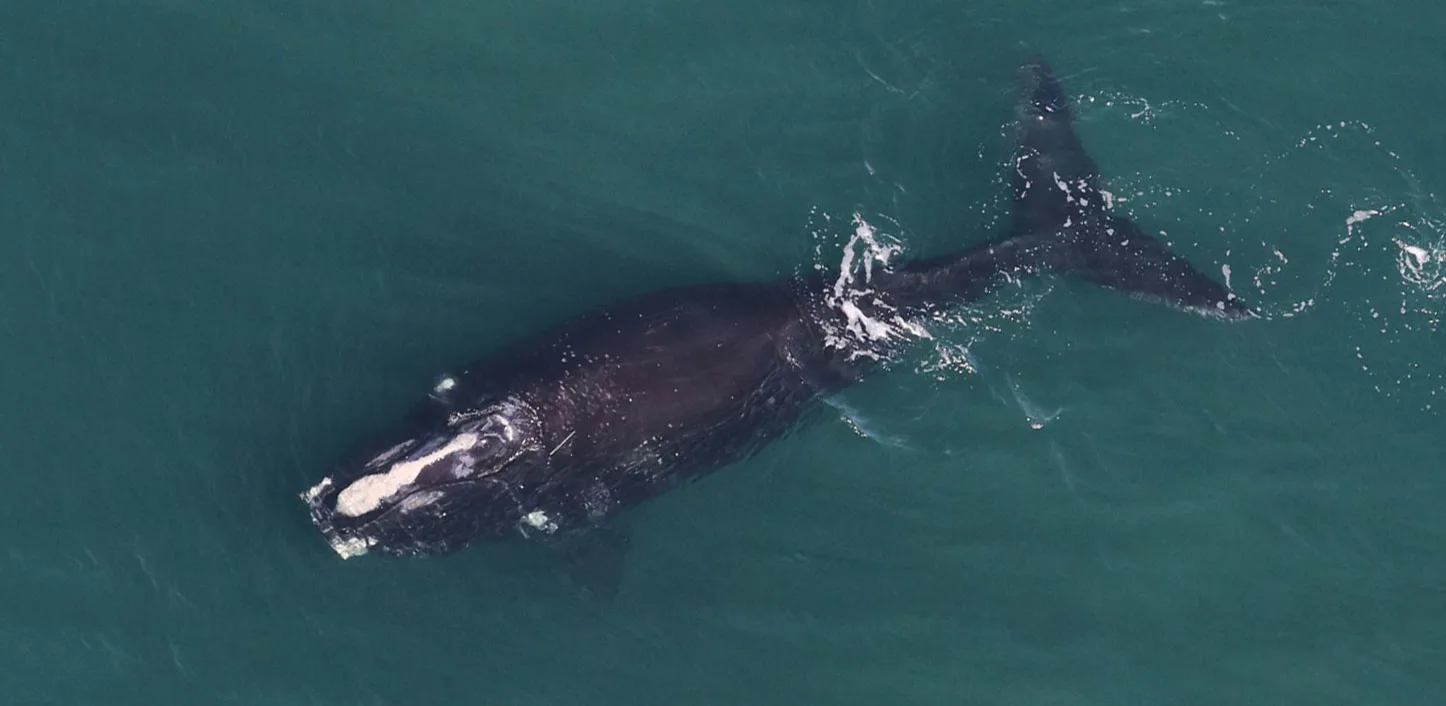
Washington. The National Fish and Wildlife Foundation and the National Oceanic and Atmospheric Administration announced on Nov. 18 grants of $8.4 million for 16 projects that develop, test and deploy technology to help mariners avoid collisions with whales, including the endangered North Atlantic right whale. The grantees will add $1.2 million in matching contributions, for a total of $9.6 million, the foundation said.
The awards are the second round of the Vessel Strike Avoidance Fund, a partnership between NOAA and the foundation, a nonprofit chartered by Congress in 1984. The fund made eight awards in 2025 and has now made 24, totaling almost $12.3 million.
Who received the grants
The grantees are nonprofits, universities and companies. Coonamessett Farm Foundation of East Falmouth, Mass., received $756,800 to develop and test materials and ways of attaching a long-term satellite tag to right whales. The New England Aquarium received $277,300 to study engineering data from vessels that struck whales and carried them on the bow, working with large ocean-going shipping companies to map high-risk areas of the Atlantic coast.
The California Marine Sanctuary Foundation received $259,900 to analyze where vessel traffic overlaps with the habitat of endangered large whales in the Gulf and to identify voluntary measures for vessel operators. The National Offshore Wind Research and Development Consortium received $739,800 to add thermal and wide-angle cameras to an existing strike avoidance system and to train AI tools to spot whales in real time.
Cornell University received $750,000 to test whether existing fiber-optic cables can pick up right whale calls, and Duke University $750,000 for a navigation system that combines whale density models, forecasts and real-time detections. Five other universities also received grants. Among the companies, Sofar Ocean Technologies received $677,000 for an acoustic monitoring network, and the company that runs the Whale Alert platform received $375,000 to feed real-time detections into it.
Why the fund exists
Vessel strikes are one of the major human threats to the right whale's recovery, according to the fund's program page, because its habitat and migration routes overlap with major ports, shipping lanes and heavy recreational boating along the Atlantic coast. Most vessels over 65 feet must slow down in designated seasonal areas, but strikes by vessels of nearly all sizes continue, and the foundation says slower speeds alone cannot fully solve the problem.
One project addresses smaller boats directly: Ocean Science Analytics received $221,100 to chart vessels under 65 feet that often carry no automatic identification system and to help design alerts for recreational mariners.
“Providing better and faster information on the water will advance conservation efforts in cooperation with mariners to protect whales and other marine species from vessel strikes.”
About this story
501c3.help wrote this story from the sources listed with it, not from material an organization sent. Our editors approved it on Nov. 19, 2026. Stories in The Nonprofit Herald are free, and nothing is asked in return. Editorial rules.
Found an error? Write to [email protected] and we will correct it.
For the organizations in this story: put the badge on your website

Put it on your About page or wherever you list press mentions, rather than in a footer that repeats on every page. It links to this story.
Linking is welcome and never required. Nothing about the story changes either way.